
Tidal Wave Mushroom Strain: 7 Essential Facts & Guide
Tidal Wave Mushroom Strain is a named variety associated with
Psilocybe cubensis and discussed within mycology and mushroom
communities. This educational guide examines its background, reported
characteristics, taxonomy, scientific research, identification considerations,
and legal status.
Tidal Wave is generally described in contemporary mycology resources as an
informal Psilocybe cubensis hybrid associated with B+ and Penis Envy
lineages. Because strain and cultivar terminology is not equivalent to formal
scientific taxonomy, descriptions should be understood in that context.
Table of Contents
What Is the Tidal Wave Mushroom Strain?
The Tidal Wave Mushroom Strain is a name used for a
Psilocybe cubensis variety or hybrid discussed within mushroom
communities. Contemporary strain references describe Tidal Wave as being
associated with B+ and Penis Envy lineages. :contentReference[oaicite:1]{index=1}
At the scientific level, Psilocybe cubensis is the relevant species
classification. NCBI currently lists Psilocybe cubensis at the
species rank within the genus Psilocybe. :contentReference[oaicite:2]{index=2}
This distinction matters because informal strain and cultivar names are not
necessarily formal taxonomic classifications. A name used by mushroom
communities should therefore be distinguished from the scientific name of the
species.
Tidal Wave Mushroom Strain Background
The background of this variety is connected with the development of named
Psilocybe cubensis lines and hybrids. Contemporary strain references
associate Tidal Wave with a B+ and Penis Envy lineage. :contentReference[oaicite:3]{index=3}
The wider scientific literature also recognizes substantial diversity among
informally recognized P. cubensis strains and points to the need for
more rigorous documentation of their genetics and characteristics. A recent
review specifically discusses strain diversity and research gaps surrounding
P. cubensis. :contentReference[oaicite:4]{index=4}
Consequently, information about individual named varieties should be treated
as a combination of community history, reported morphology, and available
scientific evidence rather than as a formally established taxonomic system.
Reported Appearance and Characteristics
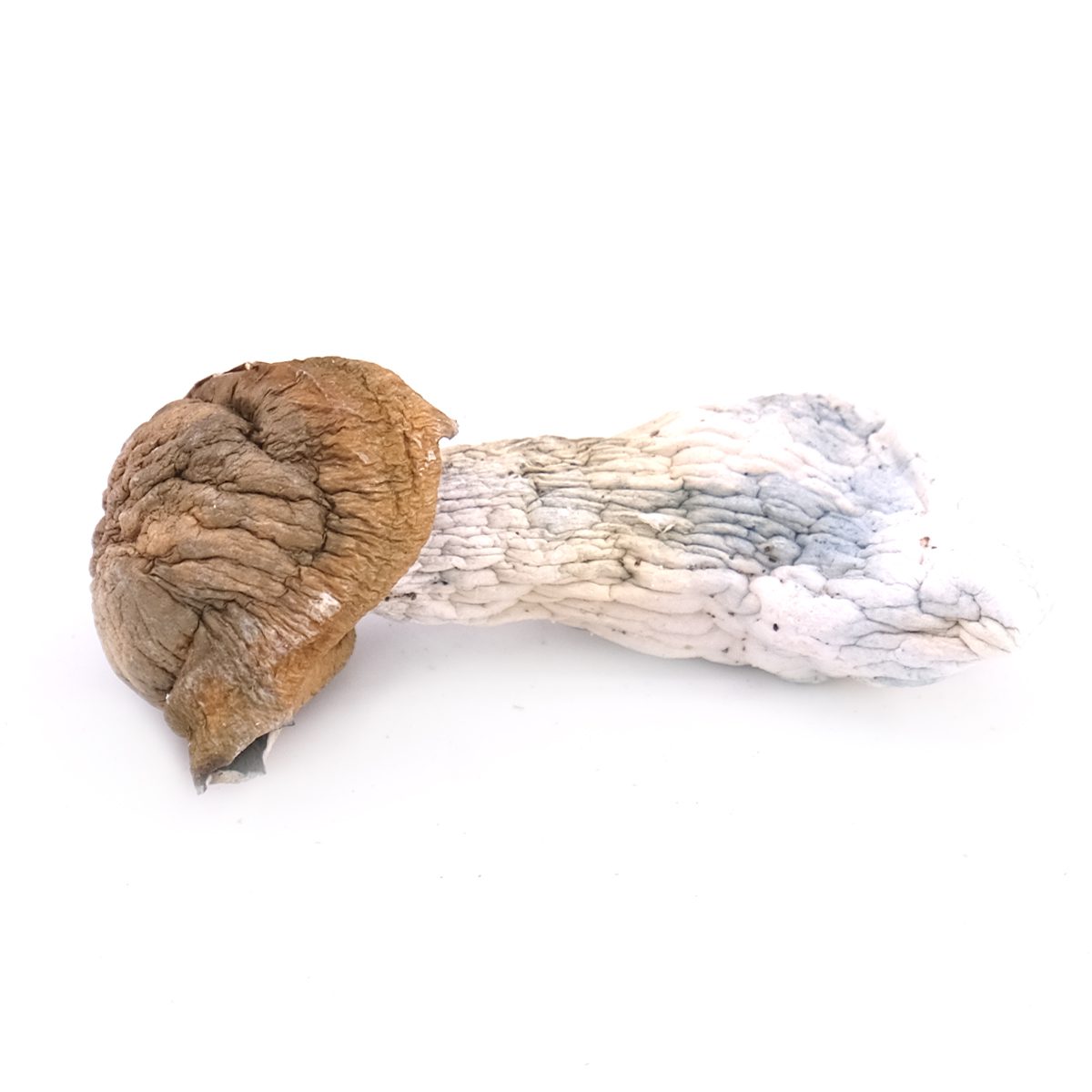
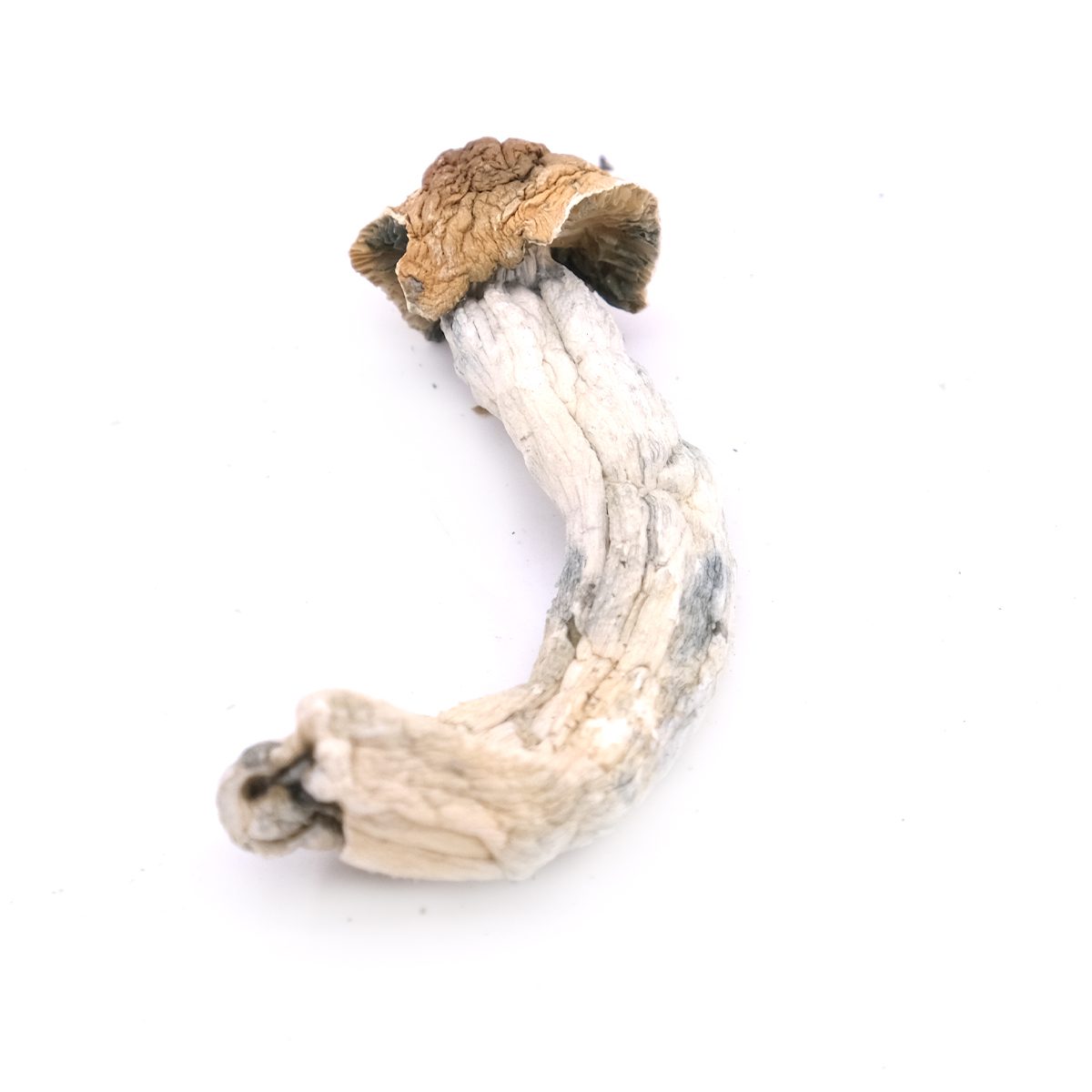
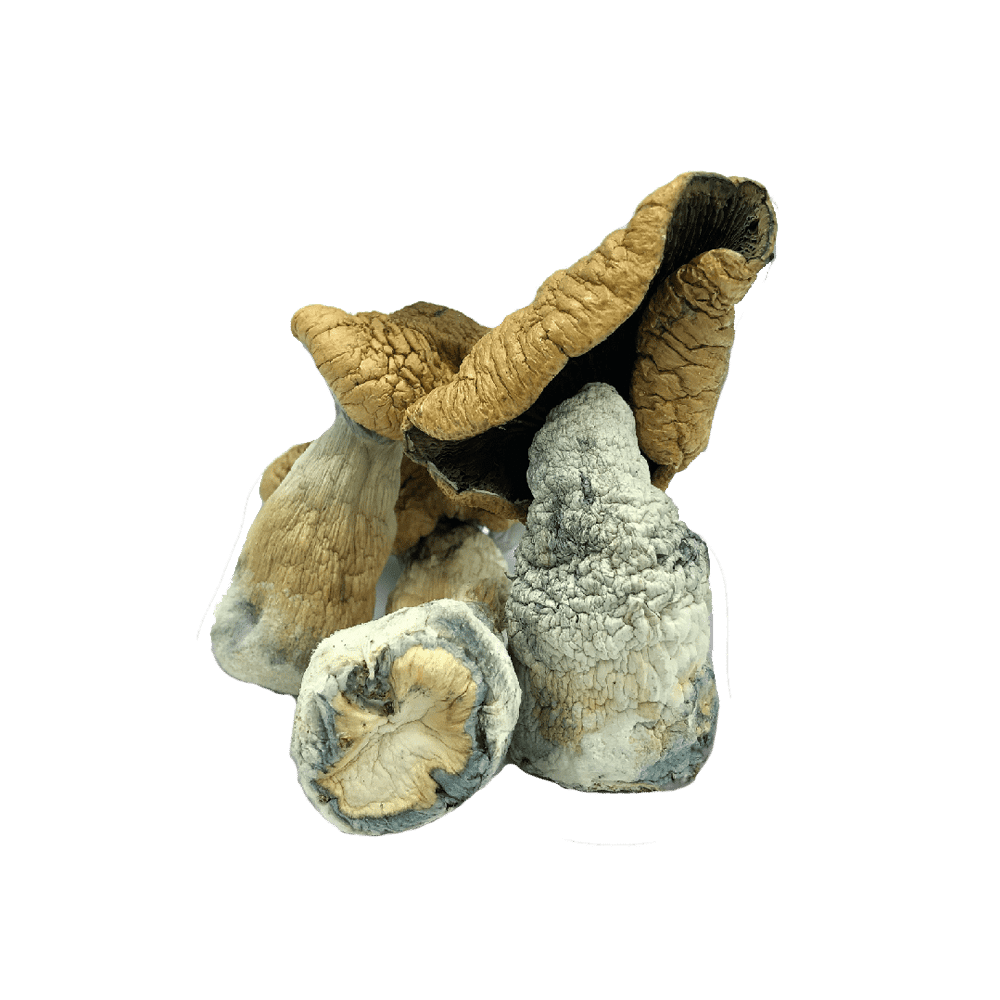
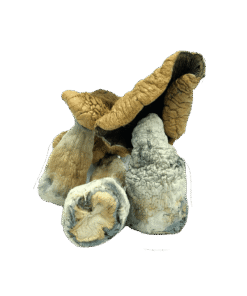
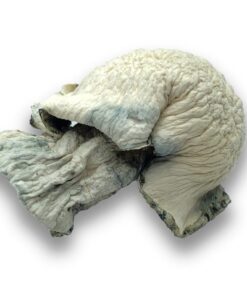
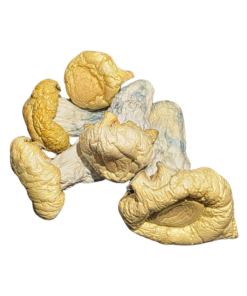
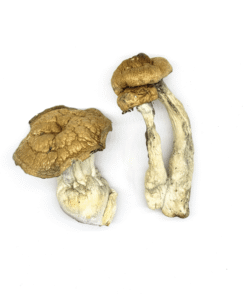
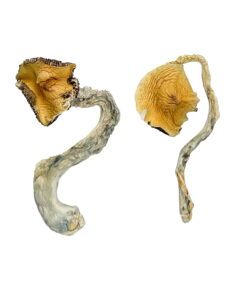
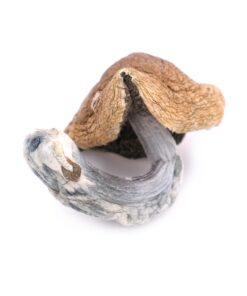
Descriptions of Tidal Wave commonly emphasize unusual or wavy cap margins and
morphological characteristics associated with its reported hybrid background.
Contemporary strain references describe broad caps with wave-like margins,
although individual specimens can vary. :contentReference[oaicite:5]{index=5}
- Wave-like or irregular cap margins may be reported.
- Cap coloration can vary between specimens.
- Stem structure can reflect characteristics associated with its parent lines.
- Morphology can change with genetics and environmental conditions.
- Individual specimens should not be assumed to have identical characteristics.
These descriptions are useful for educational comparison but should not be
treated as definitive identification criteria. Visual appearance alone cannot
establish the scientific identity or chemical composition of an unknown
mushroom.
Taxonomy and Classification
The scientific species associated with the Tidal Wave Mushroom
Strain is Psilocybe cubensis. NCBI’s taxonomy database lists
Psilocybe cubensis as a species within the genus Psilocybe.
:contentReference[oaicite:6]{index=6}
For additional taxonomic information, consult the
NCBI Taxonomy entry for Psilocybe cubensis
.
The distinction between species and named strains is important. A strain or
cultivar name used within a community does not automatically represent a
separate species under formal scientific taxonomy.
Scientific Research
Scientific research generally focuses on Psilocybe species, genetics,
taxonomy, chemistry, and compounds such as psilocybin and psilocin rather than
on individual informal strain names.
Research into Psilocybe cubensis has also highlighted the complexity
of identification and chemical characterization. One peer-reviewed study
examined DNA authentication and chemical characteristics across
Psilocybe specimens and found significant problems involving
misidentification and inconsistent sequence information. :contentReference[oaicite:7]{index=7}
Another study developed molecular methods capable of identifying
Psilocybe cubensis DNA, demonstrating why genetic techniques can
provide information that morphology alone cannot. :contentReference[oaicite:8]{index=8}
For further scientific reading, see:
DNA Authentication and Chemical Analysis of Psilocybe Mushrooms
and
Detection and Identification of Psilocybe cubensis DNA
.
Identification and Scientific Limitations
A major consideration when researching the Tidal Wave Mushroom
Strain is the difference between a community name and scientifically
confirmed identification.
Molecular research has demonstrated that DNA-based methods can help distinguish
Psilocybe cubensis from other fungal species. :contentReference[oaicite:9]{index=9}
Research has also found that taxonomic identification within the genus
Psilocybe can be complicated. One study examining fungarium specimens
reported widespread misdeterminations and inconsistencies in publicly
available sequence information. :contentReference[oaicite:10]{index=10}
For this reason, photographs, common names, and visual descriptions should not
be considered definitive scientific identification methods.
Related Mushroom Education
Readers researching the Tidal Wave Mushroom Strain can
explore related Evergreen Mushrooms educational resources covering mushroom
science, terminology, microdosing, and mushroom-related topics.
Lemon Tekking
Lemon Tekking Mushrooms
Lemon Tek Mushrooms
Does Lemon Tek Make Mushrooms Stronger
Lemon Tek Dosage
Microdosing Guide
Beginners Guide to Mushroom Microdosing
Microdose Safety Guide
Functional Mushrooms Explained
For broader mushroom information, visit the
Dried Mushrooms
category.
You can also explore the
Fresh Mushrooms
category for additional mushroom-related educational resources.
Legal and Safety Considerations
The legal status of psilocybin-containing mushrooms varies substantially
between jurisdictions. Laws can differ between countries, states, provinces,
and municipalities and can change over time.
Anyone researching the Tidal Wave Mushroom Strain should
verify the laws applicable to their location rather than relying on information
from another jurisdiction.
Mushroom identification also requires appropriate expertise. Similar-looking
fungi can make visual identification difficult, and appearance alone cannot
establish species identity or chemical composition.
This page is provided for educational and informational purposes and should
not be interpreted as legal, medical, or professional identification advice.
Frequently Asked Questions
What is the Tidal Wave Mushroom Strain?
The Tidal Wave Mushroom Strain is a named
Psilocybe cubensis variety or hybrid discussed within mushroom
communities and associated in contemporary references with B+ and Penis Envy
lineages. :contentReference[oaicite:11]{index=11}
Is Tidal Wave a separate species?
No. The scientific species associated with the variety is
Psilocybe cubensis, which NCBI lists at the species rank. :contentReference[oaicite:12]{index=12}
What is Tidal Wave known for?
Contemporary strain references commonly emphasize wave-like cap margins and
its reported hybrid lineage. Individual specimens can vary, so these
characteristics should not be treated as universal identification markers.
:contentReference[oaicite:13]{index=13}
Does scientific research specifically study Tidal Wave?
Most peer-reviewed research focuses on Psilocybe species, genetics,
taxonomy, and chemical composition rather than individual informal strain
names. Research specifically documenting named P. cubensis strains
remains comparatively limited. :contentReference[oaicite:14]{index=14}
Can appearance definitively identify this variety?
No. Visual characteristics can be useful for description, but scientific
identification may require genetic or laboratory methods. Research has
demonstrated DNA-based approaches for identifying P. cubensis.
:contentReference[oaicite:15]{index=15}
Is Tidal Wave legal everywhere?
No. Laws concerning psilocybin-containing mushrooms vary by jurisdiction.
Anyone researching the subject should check the current laws applicable to
their location.
Conclusion
The Tidal Wave Mushroom Strain is a named
Psilocybe cubensis variety or hybrid associated in contemporary
mycology references with B+ and Penis Envy lineages. Its reported morphology
and history have made it a notable subject within mushroom communities.
The scientific distinction between an informal strain name and formal
taxonomy remains important. Research into Psilocybe has shown that
genetic identification, taxonomy, and chemical characterization can be more
complex than common names suggest. :contentReference[oaicite:16]{index=16}
For reliable information, readers should prioritize peer-reviewed research,
scientific databases, and applicable local laws when researching named
mushroom varieties.
Be the first to review “Tidal wave mushroom”