
Uncategorized
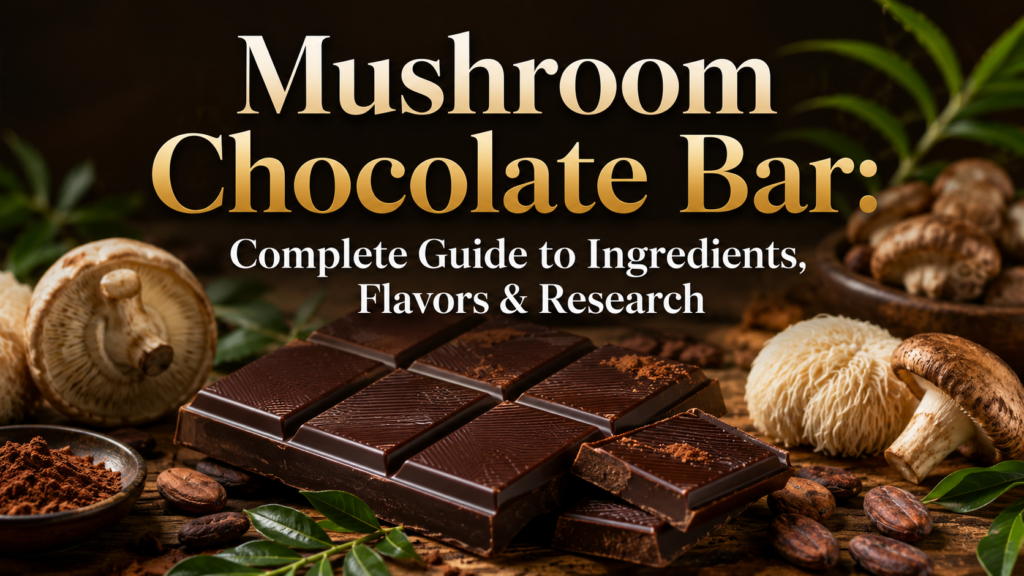
Mushroom Chocolate Bar: Complete Guide to Ingredients, Flavors & Research
Jul
Mushroom Chocolate Bar: Complete Guide to Ingredients, Flavors & Research
A Mushroom Chocolate Bar combines chocolate with carefully selected mushroom-derived ingredients to create a distinctive specialty chocolate product. As interest in premium mushroom products continues to grow, manufacturers have developed a wide range of recipes featuring cocoa, gourmet flavors, botanical ingredients, and different mushroom preparations.
Whether you are researching your first Mushroom Chocolate Bar or comparing premium products, this guide explains how these chocolate products are made, the ingredients commonly used, popular chocolate varieties, mushroom types, flavor profiles, quality considerations, storage, and current scientific research.
For additional educational information, explore our guides to Mushroom Chocolates, Chocolate Mushrooms, and Best Mushroom Chocolate Brands.
Evergreen Mushrooms also provides a dedicated Mushroom Chocolate Bars category for readers who want to explore the available collection.
Important: Mushroom chocolate products can contain different ingredients and mushroom preparations. Always review the current product label, ingredient list, serving information, allergen information, and applicable regulations before purchasing or consuming a product.
What Is a Mushroom Chocolate Bar?
A Mushroom Chocolate Bar is a chocolate confection that incorporates mushroom-derived ingredients into a chocolate recipe. Depending on the manufacturer, these products may contain culinary mushrooms, functional mushroom extracts, botanical ingredients, or proprietary mushroom blends.
Chocolate varieties can include dark chocolate, milk chocolate, white chocolate, ruby chocolate, or artisan chocolate. Additional ingredients may include toasted coconut, toffee, caramel, espresso, nuts, fruit, vanilla, or sea salt.
Consumers researching a Mushroom Chocolate Bar can compare products by examining the chocolate base, mushroom ingredients, additional ingredients, serving information, manufacturer information, and available quality documentation.
For a broader look at the category, explore our guides to Mushroom Chocolates, Chocolate Mushrooms, and Chocolate Mushroom Bars.
Before purchasing, readers can also review Are Mushroom Chocolate Bars Legit? for information about ingredient transparency, product quality, laboratory testing, and responsible purchasing considerations.
To explore the available collection, visit the Mushroom Chocolate Bars category.
The Evolution of Mushroom Chocolate
Chocolate has been enjoyed for thousands of years, evolving from traditional cacao beverages into the wide range of chocolate products available today.
As chocolate production developed, chocolatiers began experimenting with ingredients such as spices, herbs, fruits, nuts, botanicals, and mushrooms.
Today’s Mushroom Chocolate Bar market reflects this continued experimentation by combining established chocolate-making techniques with different ingredient selections and flavor combinations.
Readers interested in the manufacturing process can explore How Mushroom Chocolate Bars Are Made.
Why Mushroom Chocolate Bars Are Growing in Popularity
The popularity of the Mushroom Chocolate Bar category continues to increase as consumers explore specialty chocolate products featuring distinctive ingredients and gourmet flavors.
Several factors contribute to interest in this category:
- Growing demand for premium artisan chocolate.
- Increasing interest in mushroom education.
- Creative flavor combinations.
- Interest in specialty ingredients.
- Expansion of mushroom-focused brands.
- Greater availability through specialty retailers.
Consumers comparing different products should focus on transparent ingredient information and reputable product sources rather than relying solely on marketing descriptions.
Our guide Shroom Chocolate Bars Near Me provides additional information about comparing sources and evaluating mushroom chocolate products responsibly.
Popular Chocolate Varieties
One reason the Mushroom Chocolate Bar category offers so much variety is the selection of chocolate bases available.
Different chocolate varieties provide distinct flavor profiles, textures, and sweetness levels.
| Chocolate Type | Characteristics |
|---|---|
| Dark Chocolate | Rich cocoa flavor with higher cocoa content and generally less sweetness. |
| Milk Chocolate | Smooth and creamy texture with milk ingredients. |
| White Chocolate | Made primarily with cocoa butter, milk ingredients, and sugar. |
| Ruby Chocolate | Naturally pink chocolate with distinctive berry-like flavor notes. |
| Artisan Chocolate | Often produced in smaller batches with carefully selected cocoa ingredients. |
The chocolate base can significantly influence the overall flavor of a mushroom chocolate product.
For additional brand-focused information, explore Best Mushroom Chocolate Brands.
Common Ingredients in a Mushroom Chocolate Bar
The ingredients used in a Mushroom Chocolate Bar can vary considerably between manufacturers.
Premium chocolate formulations may use high-quality cocoa, natural flavoring ingredients, mushroom-derived ingredients, and other components selected for flavor and texture.
Common ingredients can include:
- Cocoa mass.
- Cocoa butter.
- Sugar.
- Milk powder in milk chocolate varieties.
- Natural vanilla.
- Sea salt.
- Natural flavorings.
- Botanical ingredients.
- Mushroom-derived ingredients.
- Optional ingredients such as caramel, coconut, coffee, nuts, berries, or spices.
The exact formulation should always be confirmed from the product’s current ingredient label.
Consumers with allergies or dietary restrictions should pay particular attention to allergen statements and the complete ingredient list.
For more information about product composition, see How Mushroom Chocolate Bars Are Made.
Types of Mushrooms Commonly Featured
A Mushroom Chocolate Bar may contain different mushroom ingredients depending on the manufacturer and formulation.
Some products feature functional mushroom extracts, while others use culinary mushrooms or proprietary blends.
| Mushroom Type | General Characteristics |
|---|---|
| Lion’s Mane | Frequently included in functional mushroom products and studied in scientific research. |
| Reishi | Known for its long history of traditional use and ongoing research interest. |
| Cordyceps | Commonly featured in specialty mushroom formulations. |
| Chaga | Frequently included in mushroom blends and specialty formulations. |
| Turkey Tail | Recognized for its distinctive appearance and history of traditional use. |
The presence of a particular mushroom in a chocolate product does not automatically establish a specific health outcome. Scientific evidence varies by species, preparation, compound, study design, and intended use.
Consumers interested in mushroom chocolate can also explore Chocolate Mushroom Bars and TRE House Mushroom Chocolate.
Popular Flavor Profiles
Flavor variety is another reason the Mushroom Chocolate Bar category continues to attract attention.
Chocolate makers can combine cocoa with complementary ingredients to create different gourmet flavor profiles.
Examples include:
- Dark Chocolate Toffee
- Dark Chocolate Toasted Coconut
- Salted Caramel Pecan
- Apple Pie
- Blue Acai
- Butter Pecan
- Cookies & Cream
- Mint Chocolate
- Espresso Coffee
- Peanut Butter
Flavor availability varies by manufacturer and product line, so consumers should check current product information when comparing options.
Explore the Mushroom Chocolate Bars category to view the current collection.
General Nutritional Overview
The nutritional composition of a Mushroom Chocolate Bar depends on the chocolate base, cocoa percentage, serving size, and additional ingredients used in the recipe.
Dark chocolate, milk chocolate, and white chocolate can have different nutritional profiles because their formulations differ.
Additional ingredients such as caramel, nuts, coconut, sugar, or other flavor components can also affect nutritional information.
Consumers should review the manufacturer’s current nutrition facts panel for accurate information about calories, sugars, fats, serving size, and other nutritional details.
People with specific dietary requirements should also review allergen and ingredient information before purchasing.
Current Scientific Research
Scientific interest in mushrooms, cocoa, and specialty food ingredients has expanded over recent years.
Researchers continue to study mushroom chemistry, cocoa composition, analytical testing methods, food quality assurance, ingredient stability, and botanical ingredients.
However, relatively few peer-reviewed studies have specifically evaluated finished Mushroom Chocolate Bar products as complete formulations.
Current areas of investigation include:
- Mushroom chemistry and naturally occurring compounds.
- Cocoa composition.
- Chocolate production.
- Food quality assurance.
- Analytical laboratory testing.
- Ingredient stability during manufacturing.
- Botanical ingredient research.
Much of the available scientific literature examines mushrooms or chocolate independently rather than finished mushroom chocolate products.
Consumers should therefore distinguish between evidence about an individual mushroom or cocoa and evidence about a specific finished chocolate product.
Useful research resources include PubMed, the National Institutes of Health, and the National Center for Complementary and Integrative Health.
How to Choose a Quality Mushroom Chocolate Bar
With the growing popularity of the Mushroom Chocolate Bar category, consumers have many products to compare.
A useful starting point is ingredient transparency.
When evaluating a product, consider:
- Clearly labeled ingredients.
- Complete allergen information.
- Transparent manufacturer information.
- Clearly stated serving information.
- Appropriate packaging.
- Independent laboratory testing when available.
- Proper storage recommendations.
- Reputable retailer information.
Review the Ingredient List
Do not rely solely on the product name or front-of-package marketing. Review the complete ingredient list and nutrition information.
Check Manufacturer Information
Transparent manufacturer information can help consumers understand where a product comes from and how it is represented.
Consider Laboratory Testing
Where independent laboratory testing is available, review what the testing actually evaluates. A laboratory report should not automatically be interpreted as proof of every marketing claim.
Compare Products Carefully
Comparing ingredients, serving information, manufacturing details, and available documentation provides a more useful basis for evaluating a Mushroom Chocolate Bar than packaging alone.
For additional guidance, read Best Mushroom Chocolate Brands and Are Mushroom Chocolate Bars Legit?.
Storage and Shelf Life
Proper storage helps preserve the taste, texture, and quality of a Mushroom Chocolate Bar.
Like other chocolate products, mushroom chocolate can be affected by excessive heat, humidity, and direct sunlight.
General storage considerations include:
- Store in a cool, dry place.
- Keep away from direct sunlight.
- Avoid excessive humidity.
- Reseal packaging securely after opening.
- Follow the manufacturer’s specific storage instructions.
Following the manufacturer’s recommendations can help maintain the product’s intended flavor and texture.
Consumers should also check the product’s expiration or best-by information where provided.
Frequently Asked Questions
What is a Mushroom Chocolate Bar?
A Mushroom Chocolate Bar is a chocolate product that incorporates mushroom-derived ingredients into a chocolate formulation. The exact ingredients and preparation vary between manufacturers.
What ingredients are commonly found in mushroom chocolate?
Common ingredients can include cocoa, cocoa butter, sugar, milk ingredients, vanilla, flavoring ingredients, mushroom-derived ingredients, and additional components such as nuts, coconut, caramel, or spices.
Do all Mushroom Chocolate Bars contain the same mushrooms?
No. Products can contain different mushroom species, mushroom preparations, or blends. Always check the current ingredient label.
What types of chocolate can be used?
Products can use dark chocolate, milk chocolate, white chocolate, ruby chocolate, or other artisan chocolate formulations.
How should Mushroom Chocolate Bars be stored?
Follow the manufacturer’s storage instructions. In general, chocolate products should be protected from excessive heat, humidity, and direct sunlight.
How can I compare mushroom chocolate products?
Review the complete ingredient list, mushroom ingredients, serving information, manufacturer information, allergen details, testing information where available, and storage recommendations.
Does a mushroom ingredient automatically provide a specific health benefit?
No. The presence of a mushroom ingredient does not by itself establish a particular health outcome. Evidence varies depending on the mushroom, preparation, study, and intended use.
Where can I find Mushroom Chocolate Bars?
Evergreen Mushrooms maintains a dedicated Mushroom Chocolate Bars category where readers can explore the available collection.
Where can I learn more about mushroom chocolate?
Explore our educational resources on Mushroom Chocolates, Chocolate Mushrooms, Chocolate Mushroom Bars, and How Mushroom Chocolate Bars Are Made.
Authoritative References
Conclusion
The Mushroom Chocolate Bar category combines traditional chocolate with a wide range of mushroom-derived ingredients and gourmet formulations.
Understanding the chocolate base, mushroom ingredients, additional ingredients, flavor profile, serving information, storage requirements, and available quality documentation can help consumers make more informed comparisons.
Scientific research into mushrooms and chocolate continues to develop. However, relatively few peer-reviewed studies have specifically evaluated finished mushroom chocolate products, so consumers should distinguish research involving individual ingredients from evidence about complete commercial products.
Transparent labeling and responsible product evaluation remain important when comparing different options.
To explore the current collection, visit the Mushroom Chocolate Bars category.
For more educational information, continue exploring our guides to Mushroom Chocolates, Chocolate Mushrooms, Best Mushroom Chocolate Brands, and How Mushroom Chocolate Bars Are Made.
Disclaimer
This article is provided for educational and informational purposes only. It is not intended as medical, legal, nutritional, or professional advice. Product formulations, ingredients, availability, and regulations can vary by manufacturer and jurisdiction. Always review current product labels carefully and consult an appropriately qualified professional if you have questions about your health, dietary needs, or applicable laws.
