
Uncategorized
Mushroom Gummies for Stress Relief
Aug
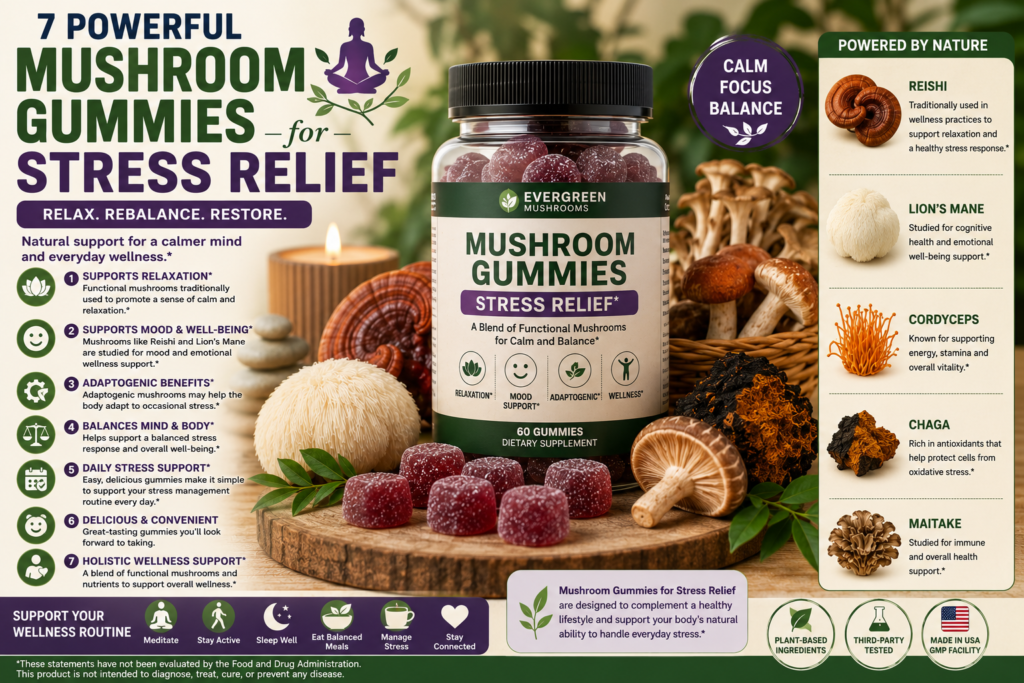
7 Powerful Mushroom Gummies for Stress Relief: Complete Guide
Mushroom Gummies for Stress Relief have become increasingly popular among people looking for convenient ways to include functional mushrooms in a broader wellness routine. Mushrooms such as Reishi and Lion’s Mane have attracted scientific interest because of their potential interactions with biological pathways associated with stress, mood, cognition, and general wellbeing.
However, it is important to distinguish between supporting general wellness and treating a medical condition. Stress is a normal physiological response, but persistent or severe stress can affect quality of life and may require professional support. A dietary supplement should never be considered a replacement for appropriate healthcare.
This guide explains how Mushroom Gummies for Stress Relief fit into a wellness routine, the functional mushrooms commonly found in these products, what research can and cannot tell us, how to evaluate labels, and important safety considerations.
Research into functional mushrooms continues to develop. The evidence varies depending on the mushroom species, preparation, amount, and population studied. The National Center for Complementary and Integrative Health recommends that consumers evaluate supplement evidence carefully and consider potential safety issues.
For a broader overview of this category, visit our Mushroom Gummies Benefits guide.
Mushroom Gummies for Stress Relief: What to Know
Mushroom Gummies for Stress Relief are chewable dietary supplements containing functional mushroom ingredients and marketed toward relaxation, stress management, mood support, or general wellness.
Reishi and Lion’s Mane are among the mushrooms most commonly associated with these discussions. Other functional mushrooms may also appear in blends designed around broader wellness goals.
Shop Magic Mushroom GummiesThe research surrounding these mushrooms is interesting but should be interpreted carefully.
Some studies have investigated mushroom compounds in laboratory, animal, or human settings. The results do not establish that every mushroom gummy can relieve stress or treat anxiety.
Commercial products can also differ considerably in species, extraction method, concentration, serving size, and additional ingredients.
For these reasons, Mushroom Gummies for Stress Relief should be viewed as dietary supplements rather than medical treatments.
Understanding Everyday Stress
Stress is the body’s natural response to demanding or challenging situations.
Short-term stress can be useful because it helps the body respond to immediate demands. Problems can arise when stress becomes persistent, overwhelming, or difficult to manage.
Stress can affect sleep, concentration, mood, appetite, energy, and general wellbeing.
Because stress has many possible causes, there is no single solution that works for everyone.
Healthy approaches can include regular physical activity, sufficient sleep, balanced nutrition, relaxation techniques, social connection, time management, and professional support when needed.
Mushroom Gummies for Stress Relief may fit into a wellness routine for some adults, but they should not replace evidence-based treatment for anxiety disorders, depression, or other mental health conditions.
What Are Mushroom Gummies for Stress Relief?
Mushroom Gummies for Stress Relief are chewable supplements containing one or more functional mushroom ingredients.
Depending on the formula, they may contain mushroom powder, mushroom extract, or a combination of different preparations.
Some products contain a single mushroom, while others combine several functional mushrooms with vitamins, minerals, botanical ingredients, or other dietary compounds.
Common Mushroom Ingredients
- Reishi
- Lion’s Mane
- Cordyceps
- Chaga
- Turkey Tail
- Maitake
Each mushroom has its own research history and chemical composition.
The presence of a particular mushroom on a label does not mean that every product containing it has the same effects.
Reishi and Stress Research
Reishi is one of the most widely discussed functional mushrooms in the wellness industry.
Reishi generally refers to mushrooms in the Ganoderma genus, with Ganoderma lucidum frequently discussed in scientific literature.
Researchers have investigated Reishi for several biological activities, including antioxidant, immune-related, and nervous-system mechanisms.
Some discussions around Reishi also involve relaxation and stress management.
However, the evidence should not be interpreted as proof that Reishi gummies can treat anxiety or other mental health disorders.
When evaluating Mushroom Gummies for Stress Relief, check the exact Reishi species and preparation used in the product.
Different extracts can have different compositions, and research findings involving one preparation cannot automatically be applied to another.
Lion’s Mane and Stress Research
Lion’s Mane, scientifically known as Hericium erinaceus, has received substantial scientific attention in recent years.
Research has explored Lion’s Mane in relation to cognition, neurological pathways, mood, and other biological processes.
This has contributed to interest in Lion’s Mane as an ingredient in functional wellness supplements.
Some human research has investigated mood-related outcomes, but evidence remains limited and does not establish Lion’s Mane as a treatment for anxiety or depression.
Therefore, when Lion’s Mane appears in Mushroom Gummies for Stress Relief, it is more appropriate to view it as a functional mushroom ingredient rather than a medication.
For a dedicated discussion, see our Benefits of Lion’s Mane Gummies article.
Cordyceps and Everyday Wellness
Cordyceps is another functional mushroom commonly found in wellness products.
Research into Cordyceps has focused on areas such as exercise performance, energy metabolism, and physical performance.
Because energy levels and stress can influence one another, Cordyceps sometimes appears in broader wellness formulas.
However, Cordyceps should not automatically be categorized as a stress-relief ingredient.
The exact purpose of a formula depends on its complete ingredient profile.
Consumers considering Mushroom Gummies for Stress Relief should therefore examine the label instead of assuming that every mushroom in a blend serves the same purpose.
For more information about energy-focused formulations, visit our Mushroom Gummies for Energy guide.
Adaptogenic Mushrooms Explained
The term “adaptogen” is frequently used in the wellness industry to describe ingredients that are believed to help the body adapt to stress.
Some mushroom products are marketed using this terminology, particularly formulas containing Reishi and other functional mushrooms.
However, consumers should be careful with broad adaptogenic claims.
The scientific evidence supporting specific stress-related outcomes can vary considerably between ingredients.
A product being labeled as an adaptogenic mushroom supplement does not automatically mean that it has been clinically demonstrated to relieve stress.
For a broader explanation, read our Benefits of Adaptogenic Mushrooms guide.
1. Convenient Daily Supplementation
One practical reason people choose Mushroom Gummies for Stress Relief is convenience.
Gummies are pre-portioned and do not require measuring powders or preparing a drink.
This can make them easier to incorporate into an established daily routine.
Convenience can be particularly useful for people who prefer chewable supplements rather than capsules.
However, convenience does not mean that a product is necessarily more effective.
Consumers should still evaluate the formulation, serving size, ingredients, and manufacturer information.
2. Interest in Stress and Mood Research
Functional mushrooms have generated scientific interest because of their diverse bioactive compounds.
Researchers have investigated mushrooms in relation to nervous-system activity, antioxidant pathways, inflammation, cognition, and mood-related mechanisms.
This research contributes to interest in Mushroom Gummies for Stress Relief.
However, there is an important difference between biological activity observed in a laboratory and a clinically meaningful effect in humans.
Consumers should therefore look for human research when evaluating specific stress-related claims.
3. Easy Integration Into a Daily Routine
A supplement is easier to use consistently when it fits naturally into a person’s existing routine.
Mushroom Gummies for Stress Relief can be incorporated according to the manufacturer’s directions alongside an established daily habit.
For example, some people may choose to take a supplement with breakfast or another regular meal.
The important consideration is to follow the labeled serving instructions rather than increasing the amount in an attempt to obtain faster results.
A supplement routine should also remain secondary to foundational wellness habits.
4. Variety of Functional Mushroom Formulas
Consumers can find many different formulations of Mushroom Gummies for Stress Relief.
Some contain Reishi as the primary mushroom, while others may combine Reishi with Lion’s Mane, Cordyceps, Chaga, or other ingredients.
Different formulas may therefore appeal to people with different wellness priorities.
| Mushroom | Common Area of Research |
|---|---|
| Reishi | Immune, antioxidant, and biological research |
| Lion’s Mane | Cognition and nervous-system research |
| Cordyceps | Exercise and energy-related research |
| Chaga | Antioxidant and preclinical research |
| Turkey Tail | Immune-related research |
The table describes research areas rather than guaranteed health benefits.
5. Convenient Alternative to Powders
Mushroom powders can be added to coffee, tea, smoothies, soups, and other foods.
However, some consumers prefer not to measure powders every day.
Mushroom Gummies for Stress Relief provide a pre-portioned chewable alternative.
This can make the format easier for travel, work, or other situations where preparing a drink is inconvenient.
One consideration is that gummies often contain sweeteners, flavoring agents, and other ingredients required to create the desired texture and taste.
Always read the complete ingredient list.
6. Simple Ingredient Comparison
Reading supplement labels makes it easier to compare Mushroom Gummies for Stress Relief.
Important details include the mushroom species, serving size, amount per serving, preparation method, and additional ingredients.
Compare These Details
- Exact mushroom species
- Scientific name
- Powder or extract
- Amount per serving
- Number of gummies per serving
- Additional vitamins
- Minerals
- Botanical ingredients
- Sweeteners
- Flavoring agents
- Directions
- Warnings
The NIH Office of Dietary Supplements provides useful information about understanding dietary supplement labels.
7. A Complement to Healthy Stress Management
The most responsible way to approach Mushroom Gummies for Stress Relief is as one possible component of a broader wellness strategy.
Healthy stress management can involve many different practices.
- Regular physical activity
- Adequate sleep
- Balanced nutrition
- Relaxation techniques
- Social connection
- Time outdoors
- Mindfulness practices
- Reasonable workload management
- Professional support when needed
A supplement should not be expected to compensate for chronic sleep deprivation, poor nutrition, excessive workload, or untreated mental health conditions.
For persistent or severe stress, speaking with a qualified healthcare professional can be more appropriate than relying solely on supplements.
Common Ingredients in Mushroom Gummies for Stress Relief
Formulas can vary significantly between manufacturers.
Possible ingredients include:
- Reishi
- Lion’s Mane
- Cordyceps
- Chaga
- Turkey Tail
- Vitamin C
- Vitamin D
- Magnesium
- Botanical extracts
- Natural flavors
- Sweeteners
- Pectin
- Gelatin
- Citric acid
Not every product contains these ingredients.
The complete product label should always be checked before consumption.
It is also important to distinguish between ingredients included for their nutritional or functional purpose and ingredients used primarily for flavor, texture, or stability.
How to Read a Mushroom Gummy Label
Understanding supplement labels can help consumers make more informed decisions about Mushroom Gummies for Stress Relief.
1. Check the Serving Size
Determine how many gummies constitute one serving.
2. Identify the Mushroom Species
Look for the exact mushroom names and scientific names where provided.
3. Check the Amount
Review how much of each active ingredient is included per serving.
4. Determine the Preparation
Check whether the product uses powder, extract, fruiting body material, mycelium, or another preparation.
5. Read Other Ingredients
Check sweeteners, colors, flavors, binders, gelling agents, vitamins, minerals, and botanical ingredients.
6. Read Directions
Follow the manufacturer’s recommended serving instructions.
7. Review Warnings
Look for allergy information, medication warnings, age recommendations, pregnancy warnings, and storage instructions.
The NIH Office of Dietary Supplements provides additional information about evaluating dietary supplement labels.
How to Evaluate Product Quality
Quality and transparency are important when selecting Mushroom Gummies for Stress Relief.
Look for products that clearly identify:
- Mushroom species
- Ingredient preparation
- Amount per serving
- Serving size
- Complete ingredients
- Manufacturer information
- Directions
- Warnings
- Storage information
- Expiration or best-by information
- Testing information when available
Third-party testing can provide additional information about quality, although a testing certificate or seal does not prove that a product will relieve stress.
Be cautious with products that promise instant relaxation, guaranteed anxiety relief, or treatment of mental health conditions.
The U.S. Food and Drug Administration provides consumer information about dietary supplements and their regulation.
Building a Healthy Stress-Management Routine
If you use Mushroom Gummies for Stress Relief, consider combining your supplement routine with evidence-based lifestyle practices.
Prioritize Sleep
Consistent, adequate sleep is an important part of physical and mental wellbeing.
Exercise Regularly
Physical activity can be an effective component of general stress management.
Eat Nutritious Foods
A varied diet provides nutrients needed for normal body function.
Practice Relaxation
Breathing exercises, meditation, mindfulness, and other relaxation practices may help some people manage everyday stress.
Maintain Social Connections
Healthy relationships and social support can contribute to emotional wellbeing.
Seek Professional Support When Needed
Persistent, severe, or overwhelming stress may require professional assessment and treatment.
Supplements should not delay appropriate care.
Safety and Possible Side Effects
Safety should always be considered before using Mushroom Gummies for Stress Relief.
Dietary supplements contain active ingredients and can cause side effects or interact with medications.
Potential concerns can include:
- Digestive discomfort
- Allergic reactions
- Sensitivity to mushroom ingredients
- Reactions to sweeteners or other ingredients
- Medication interactions
- Problems associated with excessive intake
The NCCIH safety guidance explains why consumers should evaluate supplement safety carefully.
If you experience concerning symptoms after taking a supplement, discontinue use and seek appropriate medical advice.
Mushroom Gummies and Medications
People taking prescription or over-the-counter medications should consider possible interactions before using Mushroom Gummies for Stress Relief.
Interactions can depend on the mushroom, dose, preparation, medication, and individual health circumstances.
Prescription Medication
If you take regular medication, tell your doctor or pharmacist about all supplements you use.
Pregnancy and Breastfeeding
Many dietary supplements have not been adequately studied during pregnancy or breastfeeding. Professional medical advice is recommended before use.
Before Surgery
Tell your healthcare team about all supplements you use before planned surgery.
Children
Adult mushroom gummies should not automatically be considered appropriate for children.
The NCCIH information about supplement and medication interactions explains why these potential interactions deserve attention.
How to Choose Mushroom Gummies for Stress Relief
Use this checklist when comparing Mushroom Gummies for Stress Relief.
| Factor | What to Check |
|---|---|
| Mushroom species | Look for the exact mushroom identity. |
| Preparation | Check whether it is powder, extract, fruiting body, mycelium, or another preparation. |
| Amount | Review the amount per serving. |
| Serving size | Determine how many gummies make one serving. |
| Additional ingredients | Check vitamins, minerals, botanicals, sweeteners, colors, and flavors. |
| Testing | Look for credible quality-testing information when available. |
| Manufacturer | Check for clear company and contact information. |
| Claims | Avoid guaranteed medical or disease-treatment claims. |
A larger number of mushrooms does not automatically make a product better.
Similarly, a more expensive product is not automatically more effective.
Transparency and a clearly documented formulation are more useful considerations when comparing products.
For more guidance, visit our Functional Mushroom Gummies Buying Guide.
Frequently Asked Questions
What are Mushroom Gummies for Stress Relief?
Mushroom Gummies for Stress Relief are chewable dietary supplements containing functional mushroom ingredients and marketed around stress management, relaxation, mood, or general wellness.
Which mushrooms are commonly used in stress-related formulas?
Reishi and Lion’s Mane are commonly discussed in relation to stress, mood, cognition, and general wellness. Other functional mushrooms may also appear in blended formulas.
Can mushroom gummies reduce stress?
Some mushrooms have been studied in relation to stress, mood, cognition, and nervous-system pathways, but evidence varies. A commercial gummy should not be assumed to provide a clinically proven stress-relief effect.
Are Mushroom Gummies for Stress Relief a treatment for anxiety?
No. Dietary supplements should not be considered treatments for anxiety disorders. People experiencing persistent or severe anxiety should seek appropriate professional support.
Can I take mushroom gummies every day?
Follow the manufacturer’s directions. If you take medication, have a medical condition, are pregnant or breastfeeding, or have another health concern, consult an appropriate healthcare professional before use.
Are Reishi gummies good for stress?
Reishi has attracted scientific interest in several areas of biological and wellness research, including stress-related discussions. However, evidence does not establish that every Reishi gummy will relieve stress.
Are Lion’s Mane gummies good for stress?
Lion’s Mane has been investigated in relation to cognition and mood-related outcomes. Research remains developing, and Lion’s Mane should not be considered a treatment for anxiety or depression.
Are mushroom gummies better than mushroom powder?
Not necessarily. Gummies offer convenience, while powders can be more flexible for mixing into foods and beverages. The appropriate choice depends on the formulation and individual preference.
Can mushroom gummies interact with medications?
Yes. Dietary supplements can interact with medications. Discuss supplement use with a doctor or pharmacist when appropriate.
Are mushroom gummies safe during pregnancy?
Many supplements have not been adequately studied during pregnancy. Consult a healthcare professional before using mushroom supplements during pregnancy.
Can children take mushroom gummies for stress?
Adult mushroom gummies should not automatically be given to children. Consult a pediatric healthcare professional before giving supplements to a child.
Where can I learn more about mushroom gummies?
Visit our Mushroom Gummies Benefits pillar guide for a broader overview of functional mushroom gummies.
Conclusion
Mushroom Gummies for Stress Relief offer a convenient format for people interested in incorporating functional mushrooms into a broader wellness routine.
Reishi and Lion’s Mane are among the mushrooms frequently discussed in relation to stress, mood, cognition, and general wellbeing, while other functional mushrooms may be included in broader formulas.
Nevertheless, research findings should be interpreted carefully. Evidence can vary between mushroom species, preparations, doses, and study populations.
The best approach is to evaluate the actual product rather than relying solely on marketing claims.
Check the mushroom species, preparation, amount per serving, serving size, additional ingredients, manufacturer information, directions, warnings, and available quality-testing information.
Most importantly, remember that stress management involves more than supplementation. Adequate sleep, physical activity, nutritious food, relaxation, healthy relationships, and professional support when necessary all have important roles.
If stress becomes persistent, severe, or difficult to manage, speak with an appropriate healthcare professional rather than relying solely on dietary supplements.
For the broader category, continue to our Mushroom Gummies Benefits pillar page.
You can also explore our Mushroom Gummies for Daily Wellness guide.
For information about functional mushroom ingredients more generally, read Functional Mushrooms Explained.
