
B Plus Mushroom: 7 Fascinating Facts & Ultimate Guide
The B Plus Mushroom is a named variety associated with
Psilocybe cubensis. It is one of the better-known names discussed
within mycology communities and is recognized for its cultivation history and
reported physical characteristics. Like other informal varieties, its
appearance can vary depending on genetics, maturity, and environmental
conditions.
B Plus Mushroom Guide
What Is the B Plus Mushroom?
The B Plus Mushroom, also commonly written as B+ Mushroom,
is an informal variety name associated with Psilocybe cubensis. It has
been discussed for many years within mushroom and mycology communities because
of its recognizable name and cultivation history.
The term refers to a named variety rather than a separately recognized
scientific species. This distinction is important when researching mushroom
taxonomy because informal variety names and formal scientific classifications
serve different purposes.
Descriptions of the B Plus Mushroom can also differ between sources. Individual
specimens may display different characteristics depending on genetics, maturity,
and environmental conditions.
Origin and Background of the B Plus Mushroom
The exact historical origin of the B Plus Mushroom remains
uncertain. The variety has nevertheless been cultivated and discussed within
mycology communities for many years.
Named varieties associated with Psilocybe cubensis are generally
distinguished through their reported cultivation history and observable
characteristics rather than formal taxonomic differences.
Because informal mushroom histories can vary between sources, claims about
specific lineage or provenance should be evaluated according to the quality
and reliability of the available documentation.
Physical Characteristics of the B Plus Mushroom
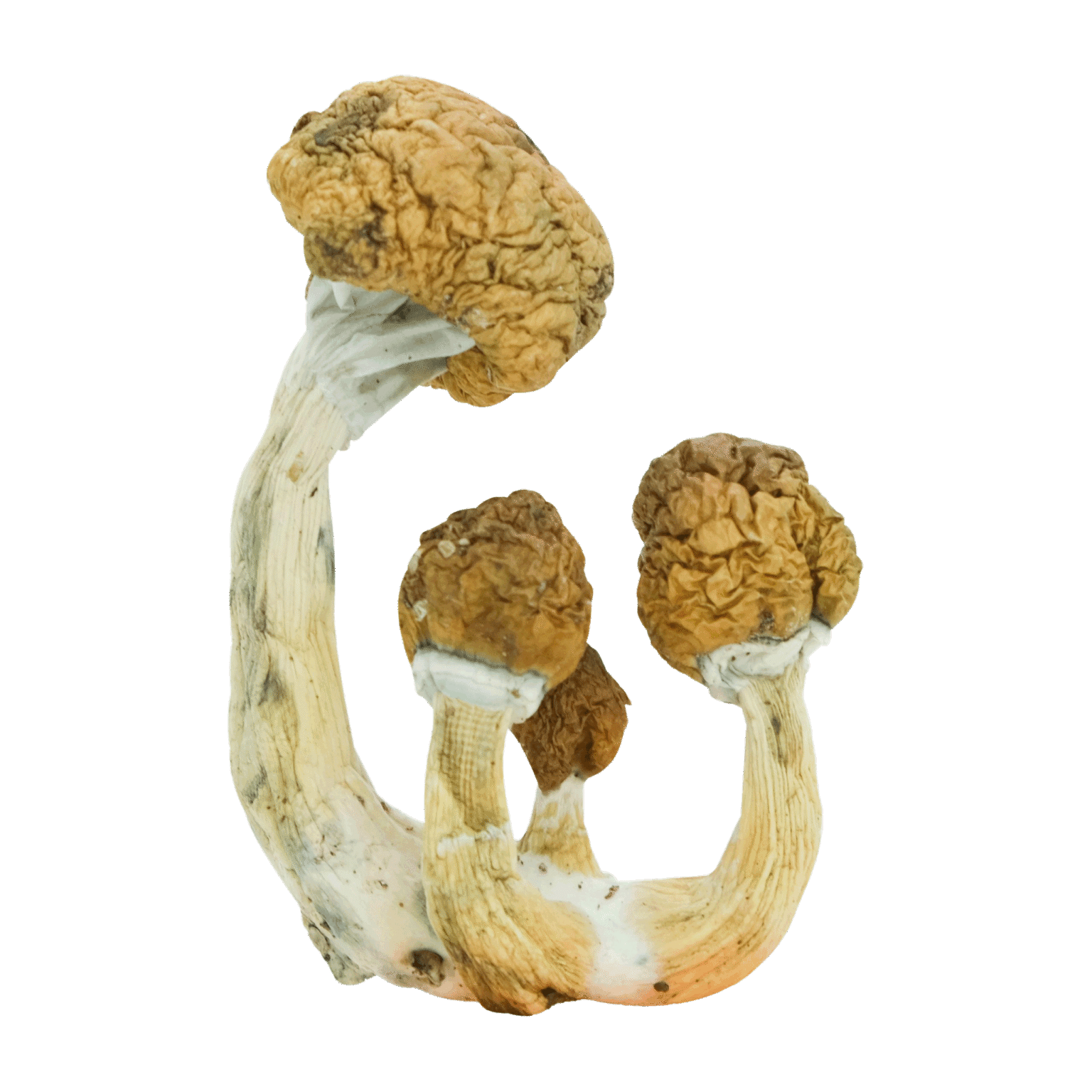
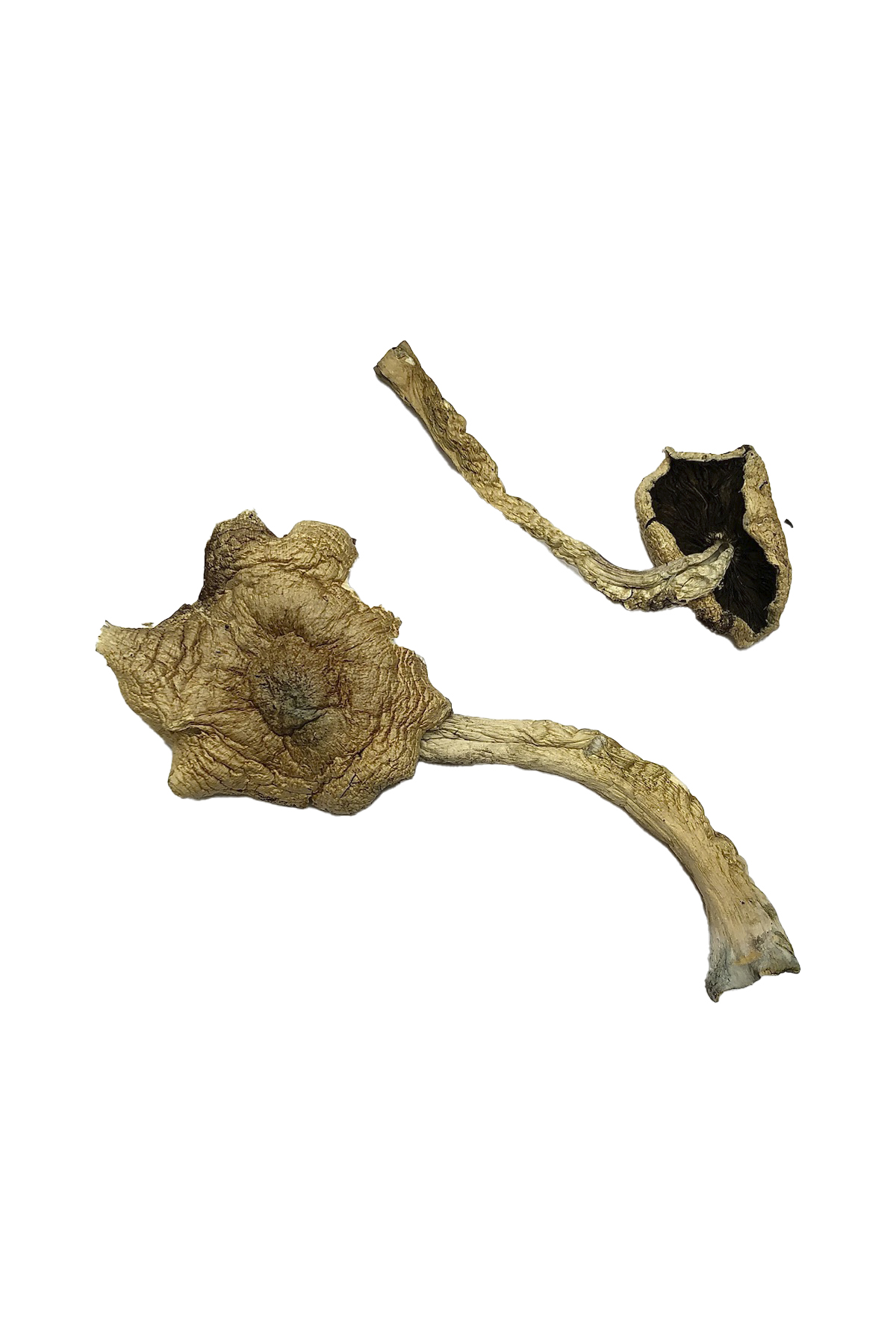
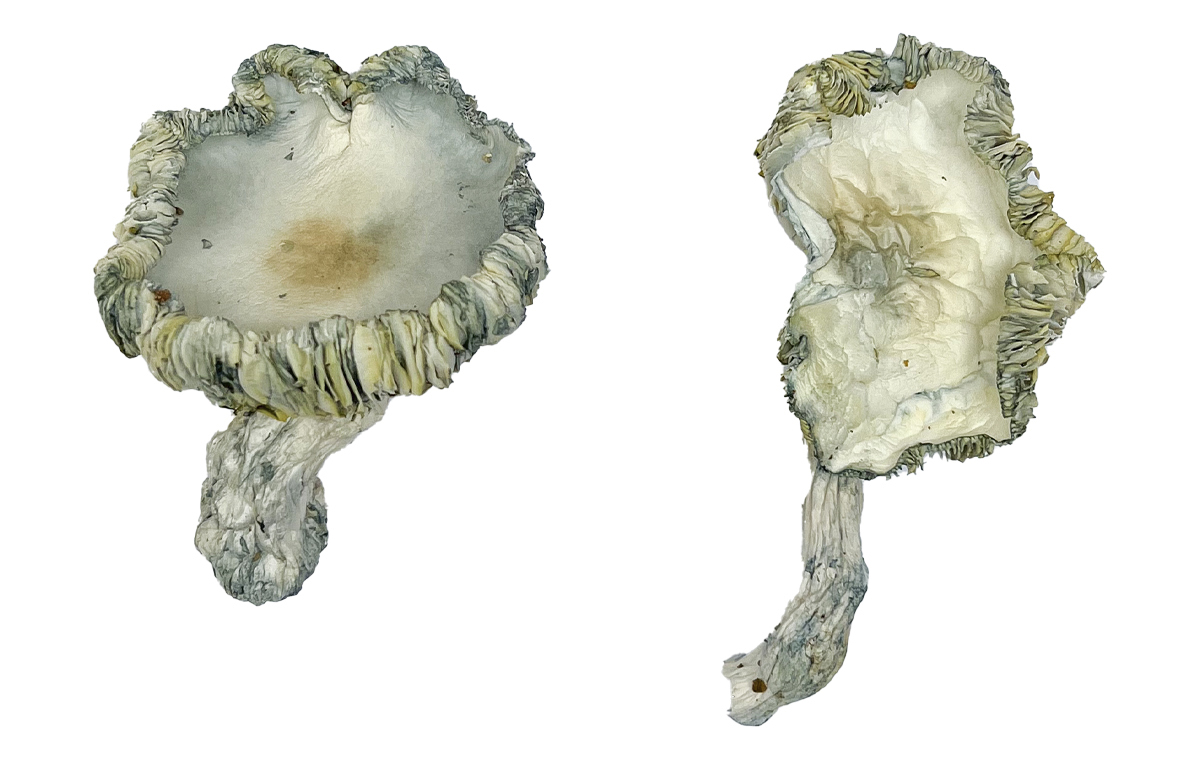
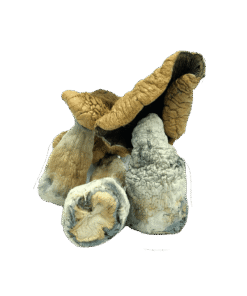
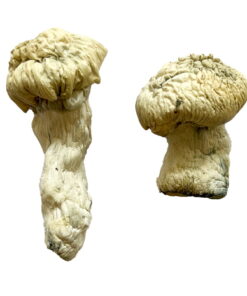
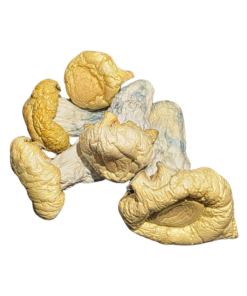
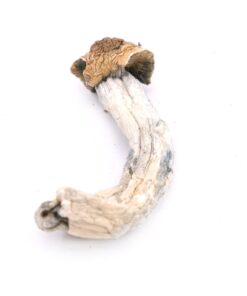
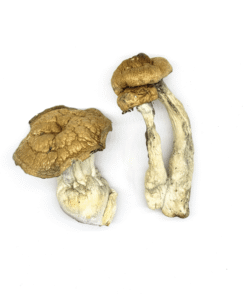
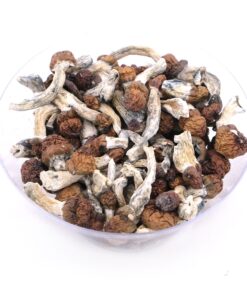
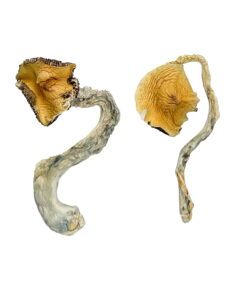
The B Plus Mushroom is commonly described as producing
medium-to-large fruiting bodies with golden or caramel-colored caps and pale,
sturdy stems.
- Medium-to-large fruiting bodies may be reported.
- Caps are commonly described as golden to caramel-colored.
- Stems may appear pale and relatively sturdy.
- A purple-brown spore print is associated with Psilocybe cubensis.
- Individual specimens can vary according to environmental conditions.
These characteristics should be considered descriptive rather than definitive.
Mushroom morphology can change according to genetics, maturity, and growing
conditions, meaning that appearance alone cannot establish a particular
variety.
Taxonomy and Classification
The B Plus Mushroom is associated with
Psilocybe cubensis. B+ is therefore best understood as an informal
named variety rather than the scientific name of a separate mushroom species.
This distinction between informal variety terminology and formal taxonomy is
important when comparing mushroom information. Scientific databases provide
more precise taxonomic terminology than common cultivation names.
For formal classification information, readers can consult the
NCBI Taxonomy database
.
Scientific Research on the B Plus Mushroom
Scientific research generally focuses on identified mushroom species and
specific compounds rather than informal names such as B+. Research involving
Psilocybe cubensis and psilocybin can cover chemistry, pharmacology,
genetics, and other biological characteristics.
Research concerning psilocybin should not automatically be interpreted as
research specifically conducted on the B Plus Mushroom. Individual
community-named varieties are not necessarily studied independently in
controlled scientific settings.
For peer-reviewed biomedical literature, readers can search
PubMed
for relevant scientific publications.
Identification Considerations
Identifying the B Plus Mushroom from appearance alone can be
challenging. Several varieties associated with Psilocybe cubensis may
share similar physical characteristics.
Cap coloration, stem structure, size, and other visible traits can provide
descriptive information, but they cannot independently establish genetic
identity.
Environmental conditions can also affect morphology. Anyone examining an
unknown wild mushroom should exercise caution because unrelated species may
display similar characteristics.
Legal and Safety Considerations
The legal status of psilocybin-containing mushrooms varies between countries,
states, and other jurisdictions. Laws and regulations can also change over
time.
For readers researching Colorado regulations, see the
Psilocybin Mushrooms in Colorado Compliance Guide
for additional jurisdiction-specific educational information.
Always consult current official information for the jurisdiction being
researched. A mushroom variety name does not itself determine its legal
classification.
Further Mushroom Reading
For broader information about functional mushroom terminology, explore
Functional Mushrooms Explained
.
For educational information about mushroom gummies and their ingredients, see
Functional Mushroom Gummies Ingredients
.
Readers interested in general mushroom wellness topics can also explore
Mushroom Gummies for Focus
.
Frequently Asked Questions About the B Plus Mushroom
What is the B Plus Mushroom?
The B Plus Mushroom is a named variety associated with
Psilocybe cubensis and is widely discussed within mycology and
mushroom cultivation communities.
Is B Plus the same as B+ Mushroom?
B Plus and B+ are commonly used as alternative ways of referring to the same
named variety in mushroom-related discussions.
Is the B Plus Mushroom a separate species?
No. It is generally regarded as a named variety associated with
Psilocybe cubensis rather than a separate scientific species.
What does the B Plus Mushroom look like?
It is commonly described as having medium-to-large fruiting bodies, golden to
caramel-colored caps, and pale, sturdy stems. Individual specimens can vary.
Can appearance confirm a B Plus Mushroom?
No. Physical appearance alone cannot reliably establish the genetic identity
of an informal mushroom variety.
What does scientific research focus on?
Most scientific research concerns identified species and compounds such as
psilocybin rather than individual community-named varieties.
Why can descriptions of B+ vary?
Descriptions can vary because informal variety terminology is not completely
standardized and individual mushroom characteristics can be affected by
genetics, maturity, and environmental conditions.
Does its legal status depend on location?
Yes. Laws concerning psilocybin-containing mushrooms differ between
jurisdictions and may change over time.
Conclusion
The B Plus Mushroom is a well-known named variety associated
with Psilocybe cubensis. Its history, reported appearance, and
classification are frequently discussed within mycology communities.
When researching B+, it is useful to distinguish informal variety terminology
from formal scientific taxonomy and to rely on authoritative scientific
sources for research and classification questions. Current official sources
should also be consulted when researching applicable laws.
Be the first to review “B+ Magic Mushrooms”